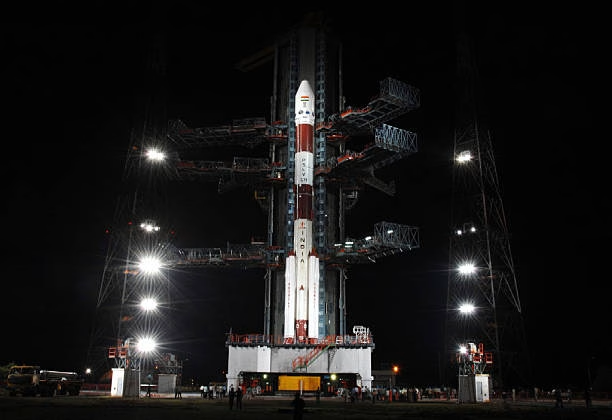
As artificial intelligence becomes more potent, tech companies are searching for new ways to support it. Large amounts of space, electricity, and processing power are needed for AI systems. Some of the most prominent figures in technology, such as Google CEO Sundar Pichai and Elon Musk, are searching beyond Earth for a solution. They intend to build data centers in orbit.
Why Build AI Data Centers in Space?
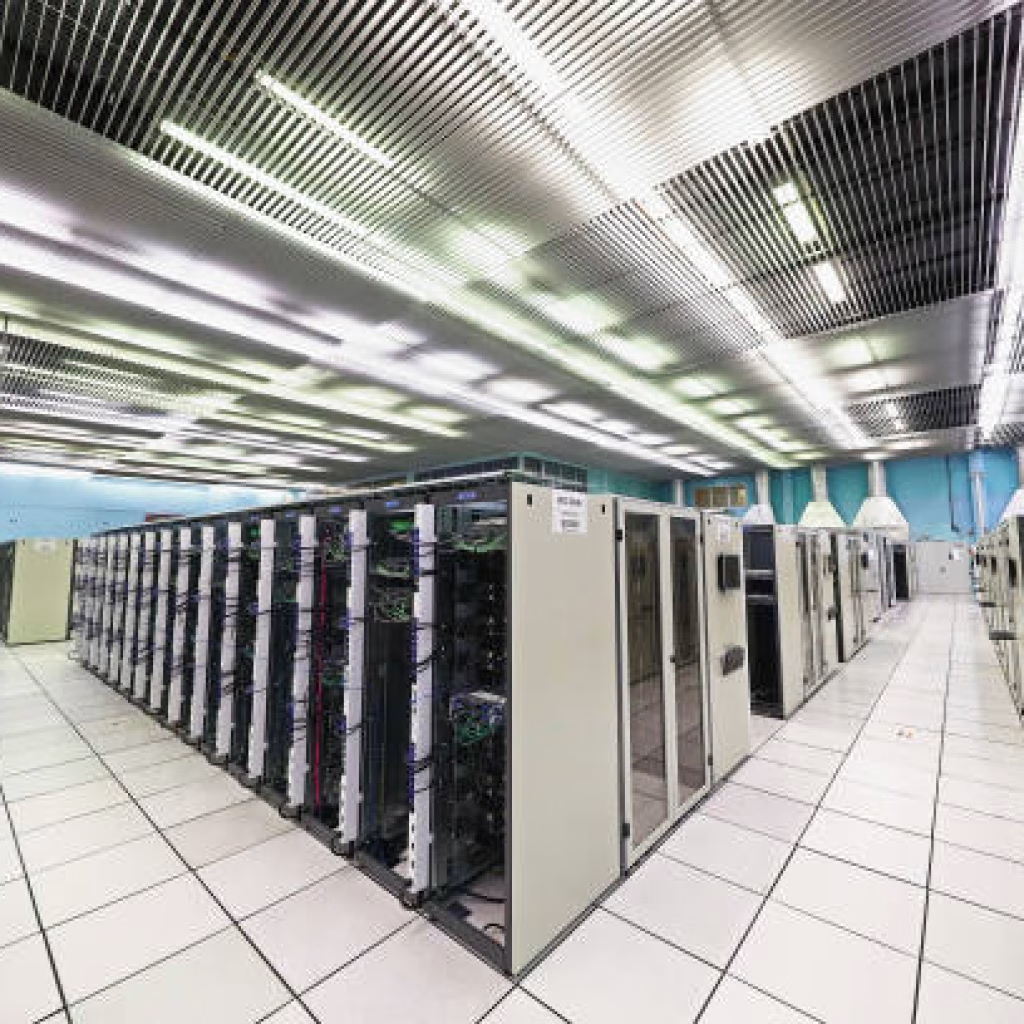
Data centers consume massive amounts of electricity and land on Earth. They also generate heat and put pressure on local electrical systems. Space offers an additional choice. Solar energy is easily accessible and unrestricted by land while in orbit. Space-based data centers that run continuously on solar power without depleting Earth’s resources could handle heavy AI workloads.
Companies believe that this could be a long-term solution to the growing demand for AI computing. With the use of satellites and advanced space technology, the idea no longer seems like science fiction.
A new warning from the AI industry?
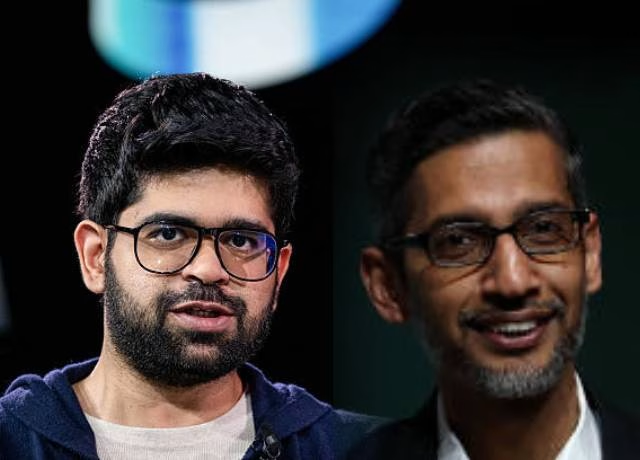
However, not everyone thinks this tactic will work. These expensive projects may be in grave danger, according to Aravind Srinivas, CEO of the AI company Perplexity. He feels that competition is not as dangerous as a shift in the way AI operates. Speaking on Prakhar Gupta’s YouTube show, Srinivas claimed that the biggest danger to data centers is the emergence of powerful on-device AI.
AI will eventually run directly on personal devices like computers, tablets, and smartphones, claims Srinivas. We call this approach “on-device AI.” If AI can work well on individual devices, there may be a significant reduction in the need for large data centers, both on Earth and in space.
What Is On-Device AI?
On-device AI means that data is processed on your computer or phone rather than being sent to a remote server. There are several benefits to this. It improves privacy since personal information stays with the user. Additionally, because internet connections don’t cause delays, it accelerates AI. Eventually, these AI systems might learn from user behavior to become more customized and helpful.
Also read, GTA 6 PC’s release date, price in India, system details, editions, characters, maps, and more
Is AI data centers in space are Future Ready?
Despite its intriguing concept, on-device AI still has limitations. Current technologies are unable to handle extremely complex AI tasks. Large data centers are still necessary for heavy processing. However, these limitations might not last forever given how quickly technology is evolving.
What Comes Next?
The rivalry between space-based data centers and on-device AI shows how rapidly the IT sector is changing. While some companies believe that the future of AI may be in our own hands, others are searching for solutions in the sky. In the upcoming years, it will become clear which direction truly affects the future of artificial intelligence.