
Dehradun Floods 2025: Introduction
In 2025, the city of Dehradun witnessed one of the worst floods in its history. Once celebrated for its scenic valleys, colonial heritage, and status as the gateway to the Himalayas, Dehradun now finds itself at the center of a devastating natural disaster. The Dehradun floods 2025 are not just about heavy rains and overflowing rivers; they represent a deeper crisis at the intersection of climate change, urban mismanagement, and fragile mountain ecology.
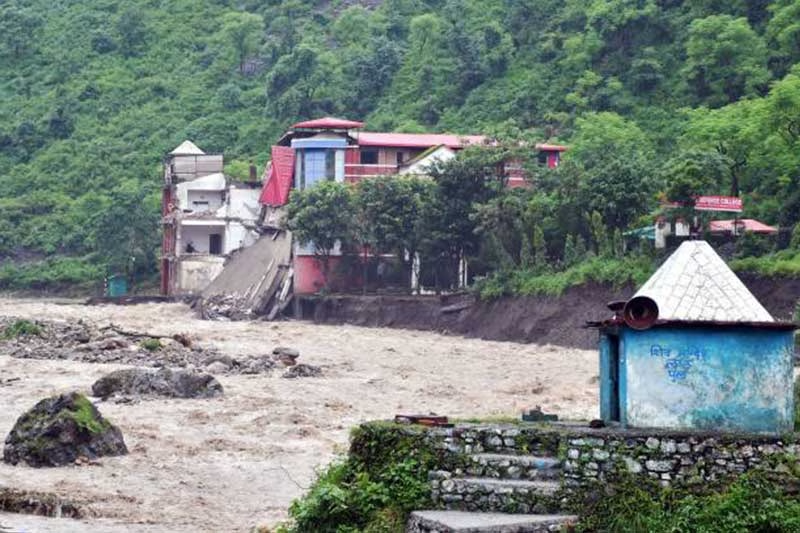
The city of Dehradun, the capital of Uttarakhand, is battling one of the most severe floods in recent years. The Dehradun floods 2025 have highlighted once again how fragile the Himalayan region is in the face of extreme weather events. Torrential rainfall, swollen rivers, and landslides have led to widespread destruction, forcing thousands of residents to evacuate their homes.
This article provides a comprehensive overview of the Dehradun floods, analyzing their causes, the extent of damage, government response, and the long-term lessons for disaster preparedness.
This feature provides a comprehensive analysis of the floods, looking at their causes, impacts, government response, and lessons for the future. It also places the tragedy in the larger context of Uttarakhand’s history of natural disasters, from the Kedarnath floods of 2013 to repeated landslides across the state.
Causes of the Dehradun Floods 2025
1. Torrential Rainfall and River Overflow
The Indian Meteorological Department (IMD) reported that parts of Dehradun received over 200 percent more rainfall than average during the first week of September 2025. The Rispana and Bindal rivers, already prone to seasonal flooding, overflowed beyond their banks, submerging low-lying areas and damaging homes, roads, and farmlands.
2. Urbanization Without Planning
Dehradun’s population has more than doubled in the last three decades. What was once a town of quiet bungalows and forests is now a crowded city of apartments, malls, and hotels.
- Encroachment on riverbeds and wetlands has reduced natural drainage.
- Construction on slopes has increased vulnerability to landslides.
- Asphalted roads and concrete surfaces have cut rainwater absorption, turning heavy rains into flash floods.
3. Climate Change and Extreme Weather
Climate scientists have repeatedly warned that the Himalayan region is warming faster than the global average. Cloudbursts, erratic rainfall, and glacial melting are now frequent. The Dehradun floods 2025 reflect this shift—rain that would normally fall across weeks came down in less than 48 hours.
4. Weak Drainage and Infrastructure Gaps
Drainage systems in many neighbourhoods were blocked by debris and garbage. Unregulated construction in flood-prone areas made matters worse. The floods revealed how poor infrastructure planning magnifies natural disasters.
Impact of the Dehradun Floods
Humanitarian Crisis
- At least 150 lives were lost, with thousands injured.
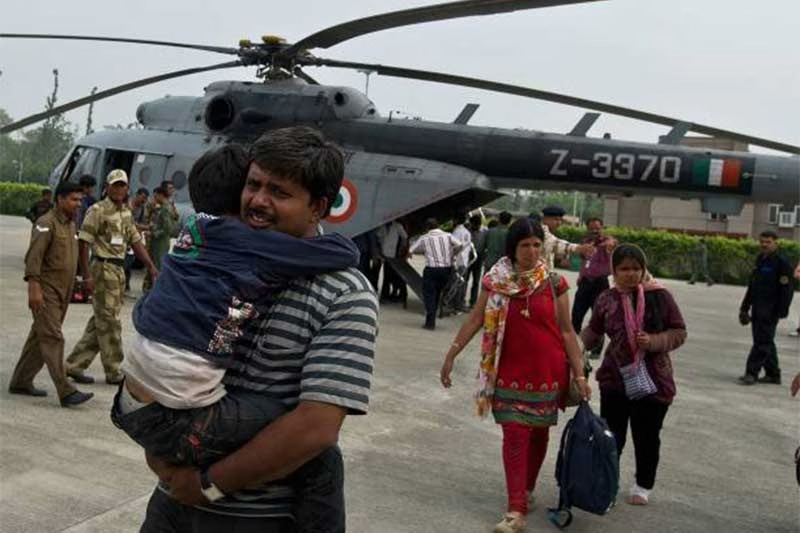
- More than 15,000 people were displaced, forced to take shelter in schools and relief camps.
- Many families reported loss of documents, savings, and lifelong assets.
Damage to Property and Economy
- Hundreds of houses were submerged or destroyed.
- Small businesses, particularly in tourism, handicrafts, and retail, suffered huge losses.
- Initial government estimates put economic damages at ₹2,500 crore.
Disruption of Daily Life
- Roads leading to Mussoorie and Haridwar were blocked due to landslides.
- Electricity and water supplies were cut in several areas for more than a week.
- Schools and universities suspended classes indefinitely.
Environmental Impact
The floods worsened soil erosion, washed away farmland, and damaged forests. Landslides destroyed biodiversity-rich slopes, putting local wildlife at risk.
Read more, Income Tax Filing Last Date
Dehradun Floods Rescue and Relief Efforts
Government Response
- The National Disaster Response Force (NDRF) and State Disaster Response Force (SDRF) launched joint operations.
- Helicopters were deployed to rescue stranded villagers and deliver supplies.
- Chief Minister Pushkar Singh Dhami announced ₹4 lakh compensation to families of the deceased.
Civil Society and Volunteers
NGOs, religious groups, and local residents organized food drives and medical camps. Student groups from universities in Dehradun volunteered in relief camps.
International Aid and Awareness
Several global climate organizations highlighted the floods as an example of how developing regions bear the brunt of climate change. Calls for international climate adaptation funding for Uttarakhand gained momentum.
Historical Context: Dehradun and Uttarakhand’s Flood Legacy
The Dehradun floods 2025 are part of a larger pattern in Uttarakhand.
- In 2010, flash floods in the region killed over 180 people.
- In 2013, the Kedarnath floods claimed thousands of lives, becoming one of India’s worst natural disasters.
- In 2021, a glacial burst in Chamoli triggered floods and landslides, destroying hydropower projects.
Each event has shown how fragile mountain ecosystems are being pushed to the edge by unregulated development and climate change.
Read more, India Meteorological Department
Editorial Analysis: Lessons from Dehradun Floods
The floods raise important questions about the future of Dehradun and other Himalayan towns.
- Urban Growth Must Be Controlled
Unchecked construction has turned natural flood buffers into disaster zones. Authorities must stop illegal encroachment and enforce zoning laws. - Climate Resilience Is Urgent
Policies should integrate climate science into city planning. Rainwater harvesting, green infrastructure, and disaster-proof housing must be priorities. - Community Awareness Matters
Disaster preparedness must become part of local education and governance. Communities that know evacuation drills and first aid respond better in crises. - Sustainable Tourism
As Dehradun serves as a tourism hub, policies must ensure that hotels, roads, and businesses do not harm the environment.
Solutions and Future Path to Prevent Dehradun Floods
- Stronger Flood Warning Systems – Early warning SMS systems must cover all vulnerable villages.
- Eco-sensitive Urban Planning – Green belts and wetlands should be preserved as natural flood barriers.
- Investment in Infrastructure – Stormwater drains, levees, and embankments must be modernized.
- Regional Cooperation – Himalayan states like Himachal Pradesh, Sikkim, and Uttarakhand can share disaster management strategies.
Read more, NDMA India
Conclusion
The Dehradun floods 2025 are more than a regional tragedy. They highlight the urgent need for India to reassess its approach to managing its fragile mountain ecosystems. While relief efforts have saved many lives, the real test lies ahead in whether governments, communities, and citizens can come together to build a resilient, sustainable, and climate-conscious future.
The city of Dehradun, once known for its calm charm, must now reinvent itself as a model of climate resilience in the Himalayas.