

For years, Indian first-time homebuyers have been caught in a well-known cycle of waiting for a long-promised real estate “crash” before making a purchase. However, due to persistently high real estate prices and uneven growth among cities, financial analysts warn that the idea of waiting for a widespread market collapse may no longer hold up in 2026.
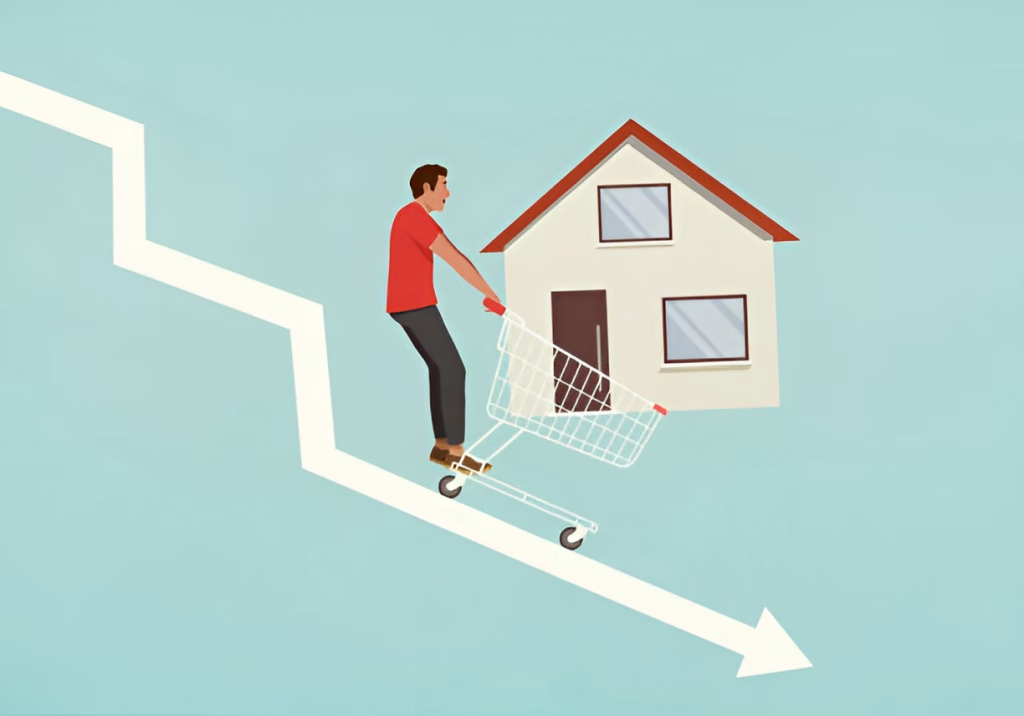
Housing market in 2026: If first-time purchasers in India wait for a crash, they might have to pay more. This is why
For years, Indian first-time homebuyers have been caught in a well-known cycle where they have to wait for a long-promised real estate “crash” before making a purchase. However, due to persistently high real estate prices and uneven growth among cities, financial analysts warn that the idea of waiting for a widespread market collapse may no longer stand up in 2026.
Infrastructure corridors and “pin codes”
According to Kaushik, the traditional method of buying real estate based on a well-known pin code is being replaced by a more targeted approach that follows new highways, metro lines, airports, and office clusters.
He uses airport-led development as a great example. Near the future Navi Mumbai International Airport and Jewar Airport in Noida, prices have skyrocketed. Growth of 15–20% has been observed in places like Panvel and the Yamuna Expressway, primarily due to job creation and commercial activity rather than speculative demand.
Tier-2 cities take center stage.
Buyers who are priced out of major cities are increasingly drawn to Tier-2 communities. Cities like Lucknow, Indore, and Nagpur are experiencing higher demand, lower entry costs, and rental yields of 6-7%, in contrast to Mumbai’s sub-3% average.
The increase, according to experts, is being caused by decentralized job development, better urban planning, and migratory patterns that no longer revolve around Delhi, Mumbai, or Bengaluru.
Also read, Why no one can avoid ISRO’s PSLV-C62 launch of the Anvesha satellite
Two-speed real estate market
Kaushik also highlights a growing disparity in the housing market. In 2026, real estate is no longer a “buy and forget” investment. Instead, it has evolved into a two-speed market where superior projects are easily distinguished from inferior ones.While less expensive standalone buildings nearby struggle to surpass 4%, a Grade-A builder’s apartment in a gated community in a growth corridor is appreciating at a rate of 12–14%, he said.
He went on to say that buyers are increasingly choosing long-term livability, project execution, and brand trust over headline pricing, ignoring discounts offered by lesser-known developers. As a result, branded ventures are selling quickly while poorly designed developments remain unsold.
Buy for the escape as well as the rent.
Another important shift is the changing rationale for investments. Because rental yields are lagging behind appreciation in most metro areas, Kaushik argues that buyers are now essentially making purchases for future exit value rather than immediate rental income.
“In 2026, you don’t buy for the rent; you buy for the exit price,” he said, highlighting the fact that following citywide averages often yields mediocre or unsatisfactory returns.
Concerns regarding affordability are still legitimate, but experts are warning more and more that waiting for a national correction could mean losing out on high-growth areas that are already getting out of reach.
“Today, real estate is a game of micro-markets,” Kaushik said. “The math completely changes if you follow the metro lines, expressways, and new office clusters.”



One Comment