Copper Anaimangalam Plates – INTRODUCTION
The Prime Minister of India, Shri Narendra Modi has recently concluded his milestone five nation visit to the UAE, the Netherlands, Sweden, Norway and Italy. The agenda was clear on expanding India (i.e. Bharat)’s geopolitical footprint in the world by breaking new ground on economic and diplomatic frontlines. India took a powerful step towards safeguarding its geo-strategic interests in global affairs.
With this trip coming in the backdrop of the US and Israel–Iran conflict and economically coercive measures enforced by the American superpower and manufacturing giant, China among others, this was a welcome move to forge new strategic alliances and a cooperative framework between India and Europe to offset some of the debilitating effects of these conflicts and coercive measures on European and our economies.
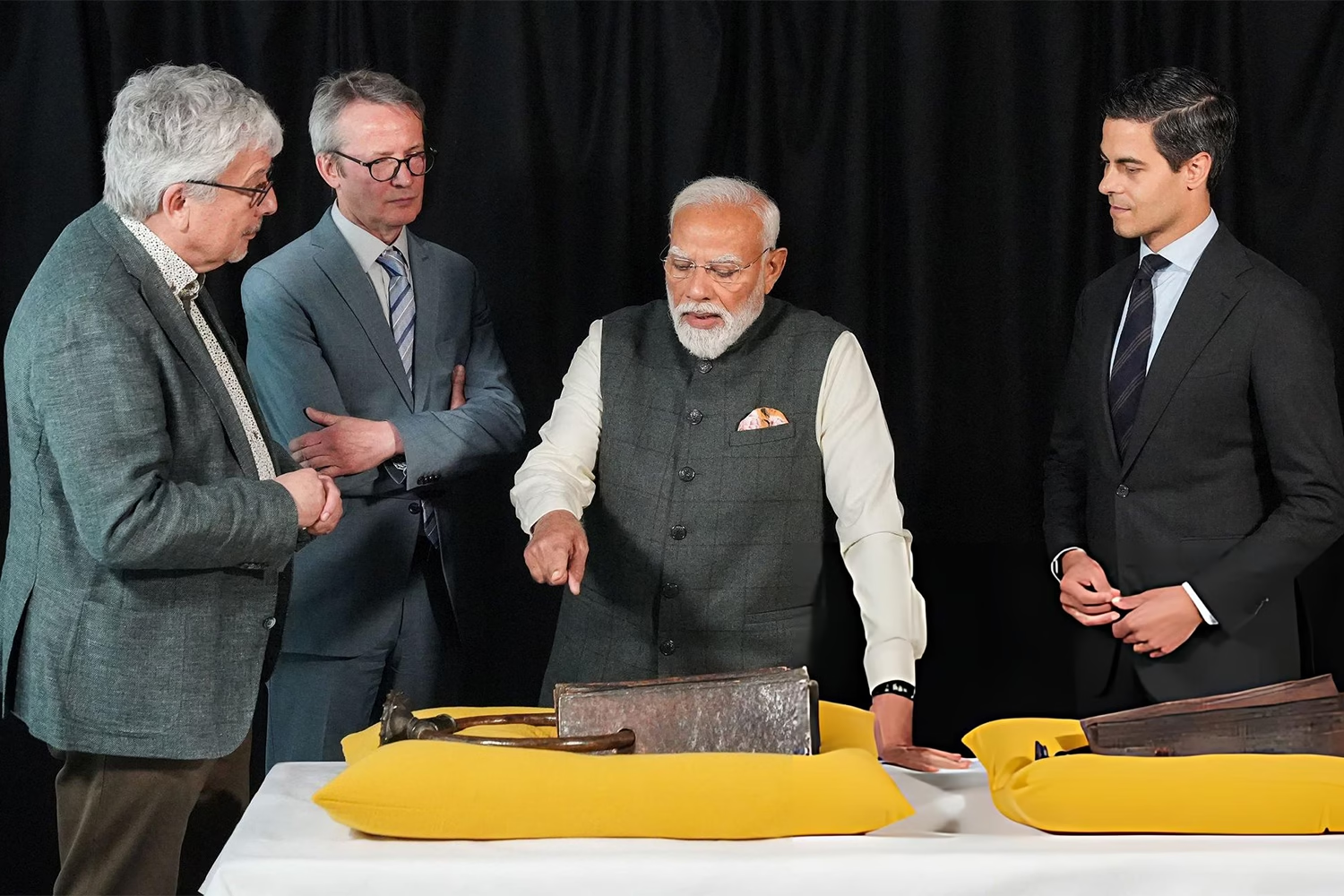
However, while much of this trip was for AI governance, energy security, critical mineral initiatives and strengthening bilateral relations, a token from the Netherlands to India brought a valued piece of our history and culture back home— the Copper Anaimangalam Plates.
THE HISTORY BEHIND THESE LEGENDARY ANAIMANGALAM PLATES
The Cholas of Thanjavur were an imperial dynasty that rose to power under Vijayalaya Chola after the fall of their Pallava overlords in the 9th Century C.E, after an extended interregnum. The Cholas were quick to cement their power under the subsequent kings like Aditya and Parantaka Chola I, with the empire rapidly spreading across South India, until their formidable influence made them a powerful dynasty in the Deccan region. However, during the reign of Parantaka Chola I, the Cholas suffered a temporary setback when the Rashtrakutas of Manyakheta defeated them in battle and put a check on their imperial ambitions. With this defeat, the Cholas entered a period of silence, but not obscurity, with royalty like Gandarditya, Sembiyan Mahadevi and Uttama Chola strengthening the Chola influence domestically via spiritual patronage and administrative measures. In fact, the dancing Nataraja we see today was popularised due to Sembiyan Mahadevi’s patronage and the foundation of the famed Chola administrative machinery and record keeping was laid in Uttama Chola’s reign.
It was due to the active efforts of Sembiyan Mahadevi and Uttama Chola that the Chola treasury and spiritual capital were well established when the greatest of the Chola emperors, Rajaraja ascended the throne of Thanjavur. What followed was a path of aggressive expansion and empire building, with Rajaraja actively retaking lost territories while paving the way for the grand construction of spiritual monuments like the Brihadeeswarar Temple in Thanjavur, dedicated to Lord Shiva, of whom Emperor Rajaraja was a great devotee.
AnaimangalamHowever, Rajaraja did actively patronise other faiths too, entertaining and encouraging strong cultural links with Southeast Asia, which shared ancestral Hindu and Buddhist ties with India. With strong spiritual and cultural ties forged between his empire and those regions across the Indian Ocean, Rajaraja extended his Chola influence on an international scale, much like India does so today, like the five-nation trip undertaken by the Hon’ble Prime Minister recently.
In fact, on the backs of enterprising trade guilds backed by the Chola Crown, itinerant merchants and traders crossed the seas to lucratively export textiles, metalworks, precious stones, spices and ivory and imported precious metals like gold and iron ore, fragrant woods like sandalwood and spices of the Southeast Asian variety. Along with these, Buddhist and Hindu spiritual ideas and knowledge flowed between these regions along the maritime Silk Route, projecting India as a cultural superpower of the medieval era.
One of the neighbours of the Cholas across the seas, the Srivijaya Thalassocracy (located in present-day Indonesia, ruled by Sri Mara Vijayotunga Varman), displayed an ardent wish to commission a grand Vihara in the land of Buddha and he approached Emperor Rajaraja to fulfil this endeavour in Nagapattinam, a prominent port of the Chola empire. Historical records suggest that Emperor Rajaraja was enthusiastic about the same, which deepened religious ties and cultural exchanges between the Chola Empire and Srivijaya. This gave rise to the magnificent Chudamani Vihara in Nagapattinam (shown cinematographically in the Tamil film Ponniyin Selvam).
Historians state that Emperor Rajaraja issued a grant recording the land revenues and taxes from villages that would be used in the upkeep and maintenance of the Vihara. The Chola empire would grow even more powerful, reaching new heights under Rajendra Chola, the son and successor of Rajaraja Chola in the 11th Century C.E.
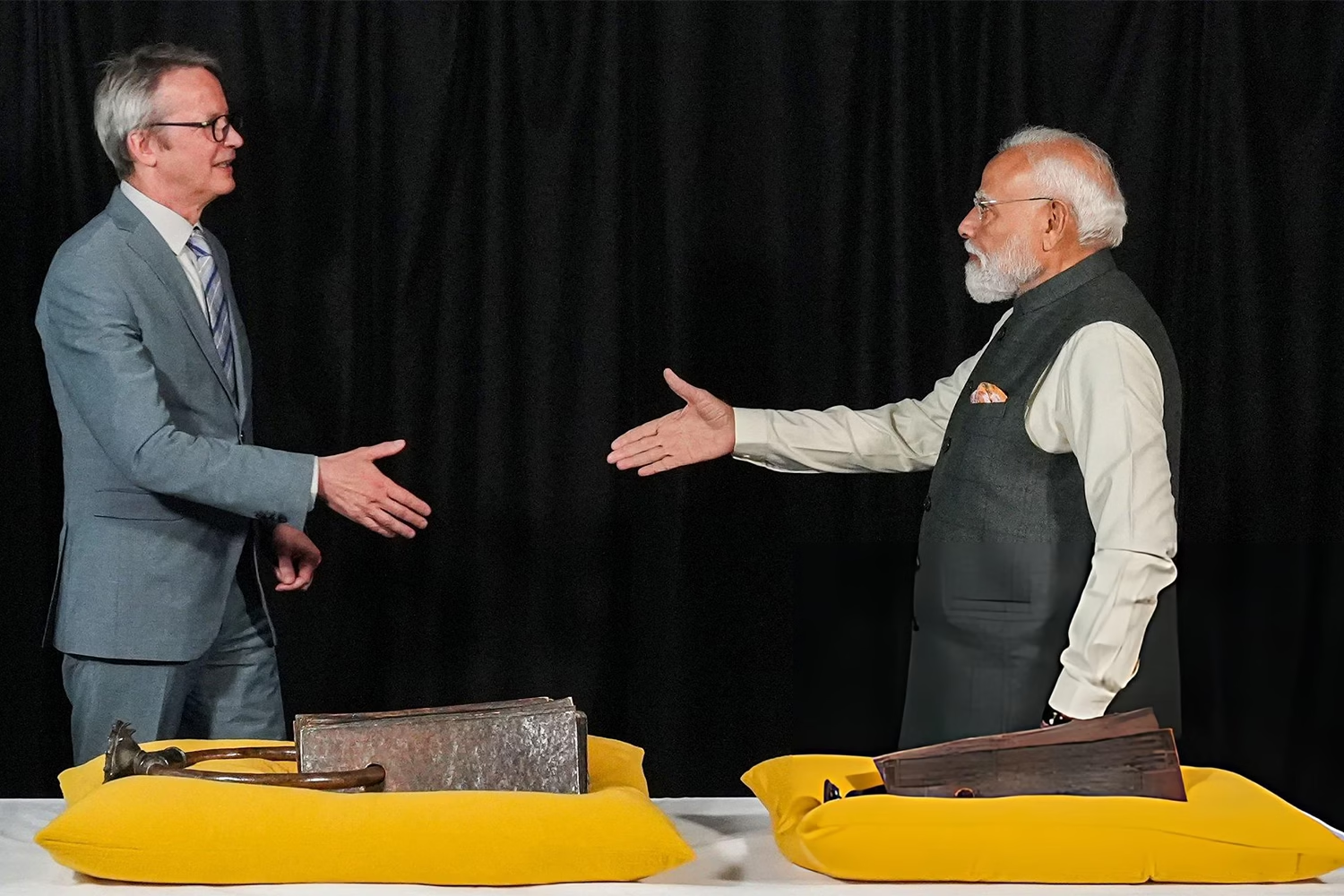
Heralding a new age of Chola supremacy in the Indian Ocean, Rajendra Chola cemented his empire’s commercial and geopolitical footprint along the lands of the Indian Ocean, all the way up to Tang China. He had his father’s original grant inscribed on a magnificent charter containing a set of 21 copper Anaimangalam plates bound by a bronze ring bearing the imperial seal of Rajendra Chola. Five of these have Sanskrit inscriptions in the Grantha script, while the remaining sixteen Anaimangalam plates contain Tamil inscriptions. The Sanskrit portion traces the divine genealogy of the Cholas, memorialising their ancestry to the Solar (Suryavanshi) dynasty and beginning with invocations to Vishnu. The Tamil section is what records the endowment of land revenues for the maintenance of the Buddhist Vihara at Nāgapattinam.
Type your paragraph here
The second charter, containing 3 Anaimangalam plates, was issued during the time of Kulothunga Chola I, the last great Chola emperor, continuing the saga of Buddhist patronage and its cross-border spread.
IMPORTANCE OF THESE COPPER PLATES
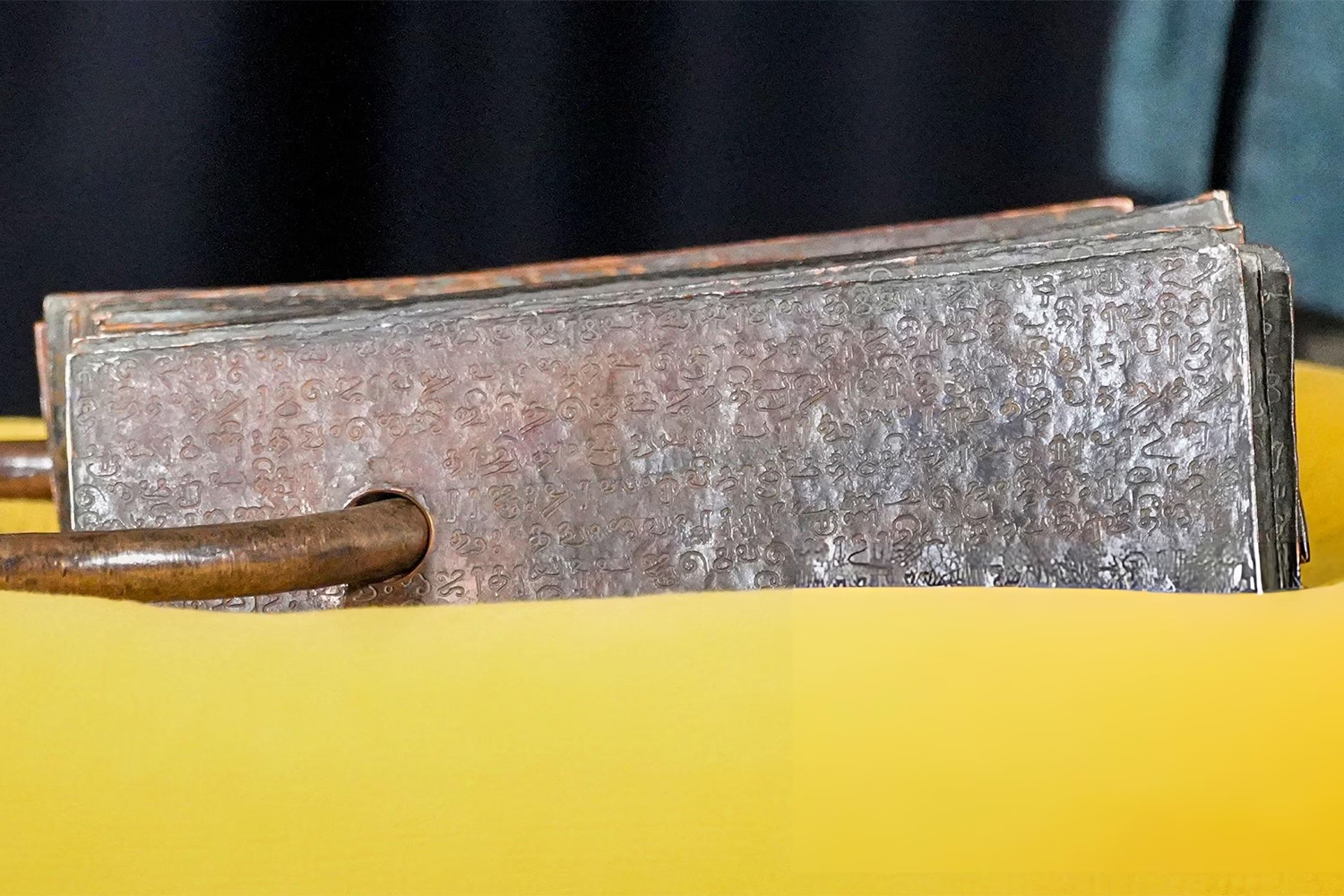
The Copper Anaimangalam Plates (also called the Leiden University Copper Plates) were officially repatriated to India (i.e. Bharat) in light of PM Modi’s visit to the Netherlands. These Anaimangalam plates serve as valuable records of the spiritual and intellectual exchanges between India and Southeast Asia, highlighting India’s transnational influence in medieval times due to trade and cultural exchanges.
These Anaimangalam plates weigh nearly 30 kilograms and found themselves in Dutch possession when Nagapattinam found itself under the control of the Dutch East India Company. They were removed from local possession by a Dutch official, Florentius Camper via a missionary under unknown circumstances in the 18th Century C.E. Over time, legal and diplomatic efforts gained momentum to seek the repatriation of these plates to their homeland. In 2022, the Netherlands adopted a pro-restitution stance towards the restoration of artefacts in its possession and voices grew citing that it was time the Anaimangalam Plates were brought home. Finally, in May 2026, the Anaimangalam plates found their way back into Indian hands in a formal ceremony at the Hague, Netherlands.
This is a major victory for India, which in the last decade has actively sought the return of Indian artefacts that were smuggled or transported out of India through European colonialists. It gives us the required momentum to unearth our cultural relics and antiques, which are hidden in the vaults of Western collectors or on display in foreign museums, when they should be rightfully in our possession.
CONCLUSION
With history bearing witness to the return of the Anaimangalam Copper Plates to their place of origin, now is not the time to rest easy on our laurels. In fact, it is time to redouble our efforts to reach out to nations which hold possession of our artefacts and retrieve them to ensure the reclamation of our past when India (i.e. Bharat) reached across the seas and shaped the Indian Ocean, capturing its history of religious cooperation, movement of trade and transfer of spiritual and intellectual ideas on a transnational level.
What do you feel about this post?

Like

Love

Happy

Haha

Sad


The style of writing is indeed apt to enable keep reading chronicles.
Excellent. The article gives a clear idea about the glorious reign of the Chola emperors in Tamilnadu 1000 years ago. Kudos the present Goverment and PM who brought bavk the copper plates from. Netherlands. Great writeup by the author Vignesh Ganesh
Wow excellent information and beautifully penned
Crisp and informative. The sanskrit plate that records Raja Rajan tracing his roots to Suryavansh, Manu and Ikshvaku (Raghuvansh) removed by a scheming missionary to push the Aryan Dravidian theory has subtly been exposed. Now we know from where the power of the little dynamo Vaibhav comes from. From his Surya/Chola roots👍
Beautifully written! Keep it up Vignesh
To be honest, was not aware of this fact. After knowing the fact too, the descriptive details provided is a value addition. Keep it up and keep providing us with such information.
Great job
Thanks for sharing the forgotten history.
Very intriguing article!Details explained quite nicely.
Very informative article!