In 2026, small businesses can finally start to catch up with the giants in terms of competitiveness, and the tool that makes it possible is Artificial Intelligence. The problem faced by many American entrepreneurs nowadays is not accessing AI technology but finding an application that won’t require extensive technical knowledge to utilize it.
- AI tools for small business owners USA
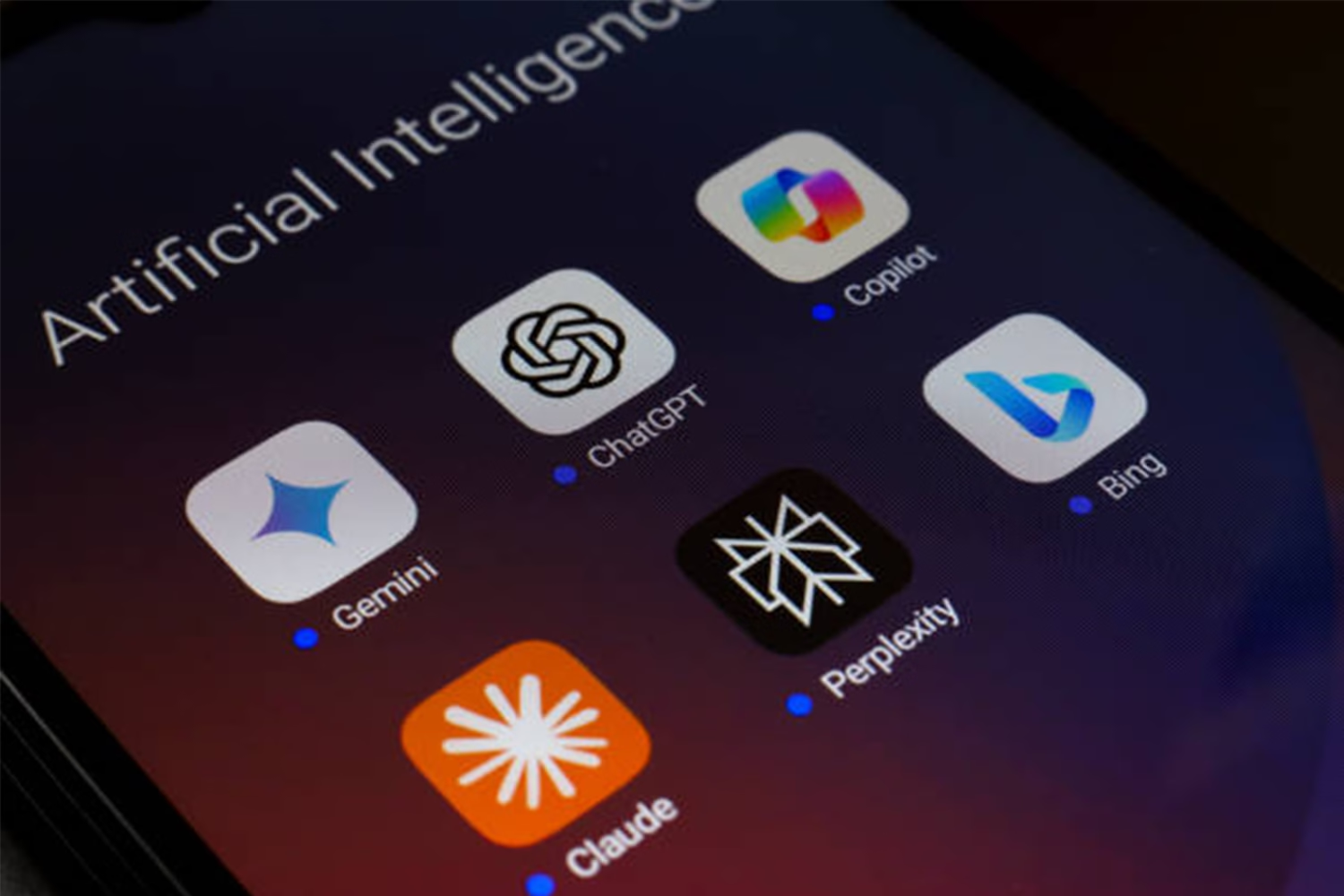
“The task in 2026 is not about working harder but using Agentic AI technology to regain lost time,” said a senior analyst at Orbis Chronicle. Automation of routine processes allows saving 10 hours weekly on average for any small business owner in the US. Here are the top seven tools to get started in AI technology.
1. ChatGPT Plus:
The One-of-a-Kind Business Intelligence Partner From creating an email template to conducting a thorough analysis of large datasets, ChatGPT is one of the best AI tools that small business owners have on their side as a business intelligence partner.
Good For: Writing emails, planning future development, and summarizing lengthy text passages.
The Best Feature: The 2026 “Live Web” option enables it to perform real-time research on the US market trends.
2. Canva Magic Studio: Design on Autopilot
Local businesses in the US cannot survive without visual branding on popular social media such as Instagram and LinkedIn. Canva Magic Studio applies generative AI that transforms plain text prompts into professionally designed flyers, presentations, and social media ads.
Best Suited For: Top-notch marketing visuals without the involvement of a graphic designer.
Key Advantage: The “Magic Switch” function enables automatic resizing of one design for all social media platforms at once.
3. Zoho Zia: The Small Business CRM Assistant
Sales analytics can be confusing for a beginner. With Zoho Zia, you get an AI assistant that predicts when a customer is most likely to make a purchase. It tracks your leads from the United States and tells you when the best time is to call them.
Best Use Case: Sales forecasting and managing leads.
Tip: Use Zia to predict which customers are likely to “churn” before they actually do.
4. Grammarly Business: Your 24/7 Editor
Trust is the key ingredient in any small business. An innocent typo in a client proposal could cost you the deal. Grammarly Business guarantees that your communication stays professional, clear, and consistent across all variants of American English.
Best Use Case: Client proposals, Slack communications, and external correspondence.
5. Buffer AI: Simplifying Content Scheduling
Trust is the key ingredient in any small business. An innocent typo in a client proposal could cost you the deal. Grammarly Business guarantees that your communication stays professional, clear, and consistent across all variants of American English.
Best Use Case: Client proposals, Slack communications, and external correspondence.
6. QuickBooks AI: Understanding Business Finances Better
During tax season, US business owners become extremely stressed about their finances. QuickBooks’ AI technology categorizes expenses based on receipts and identifies possible tax write-offs.
Best For: Tracking and monitoring the health of your finances.
The Bonus: It saves a lot of time from manual data entry every month.
7. Tidio Lyro: Round-the-Clock Customer Service Desk
Modern American customers are impatient when waiting for replies. With Tidio’s Lyro Artificial Intelligence, a “plug-and-play” chatbot answers typical customer query based on information from your website.
Good For: E-commerce stores and service-based businesses.
The Advantage: It deals with up to 70% of customer queries without any human involvement.
| Business Area | Primary AI Tool | Estimated Time Saved |
|---|---|---|
| Marketing | Canva & Buffer | 4 Hours |
| Support | Tidio Lyro | 3 Hours |
| Operations | ChatGPT & Zoho | 5 Hours |
| Finance | QuickBooks | 2 Hours |
Avoiding the Challenges of Implementing AI
How do you ensure success in 2026? According to SEO specialists, you begin by selecting just one of your bottlenecks—the task you despise the most—and becoming accustomed to just one tool at a time.
In our recent Cybersecurity Outlook for 2026, we have already highlighted how all the AI tools that you own should be configured for maximum privacy, since your proprietary data needs to be protected. The successful American small businesses in 2026 will treat their AI as a coworker.
What do you feel about this post?

Like

Love

Happy

Haha

Sad